
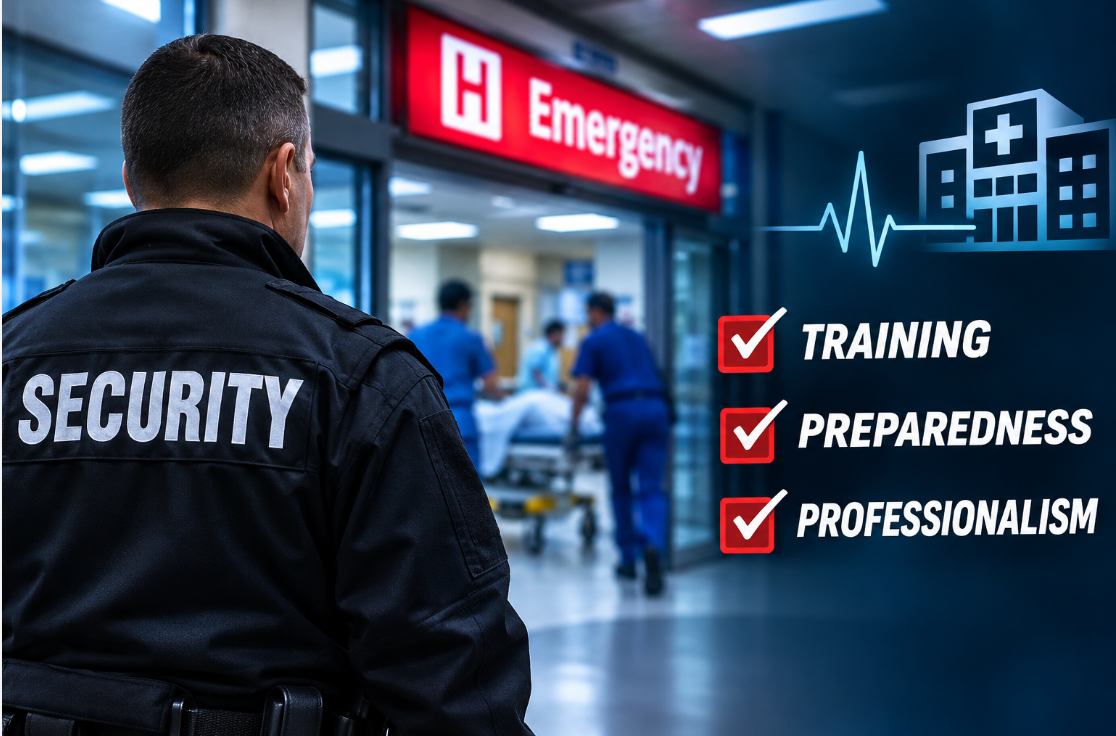
A security officer working in a hospital emergency department may be called upon to intervene in a violent confrontation, protect vulnerable patients, assist clinical staff or make critical decisions under pressure. Yet that officer may hold the same provincial security licence as someone assigned to a condominium concierge desk.
Both positions carry important responsibilities, but are the training requirements appropriate for the very different environments in which these officers work?
For Martin Green, CHPA, a healthcare security professional with more than 45 years of experience, that question is part of a much larger conversation about the future of Canada's private security industry.
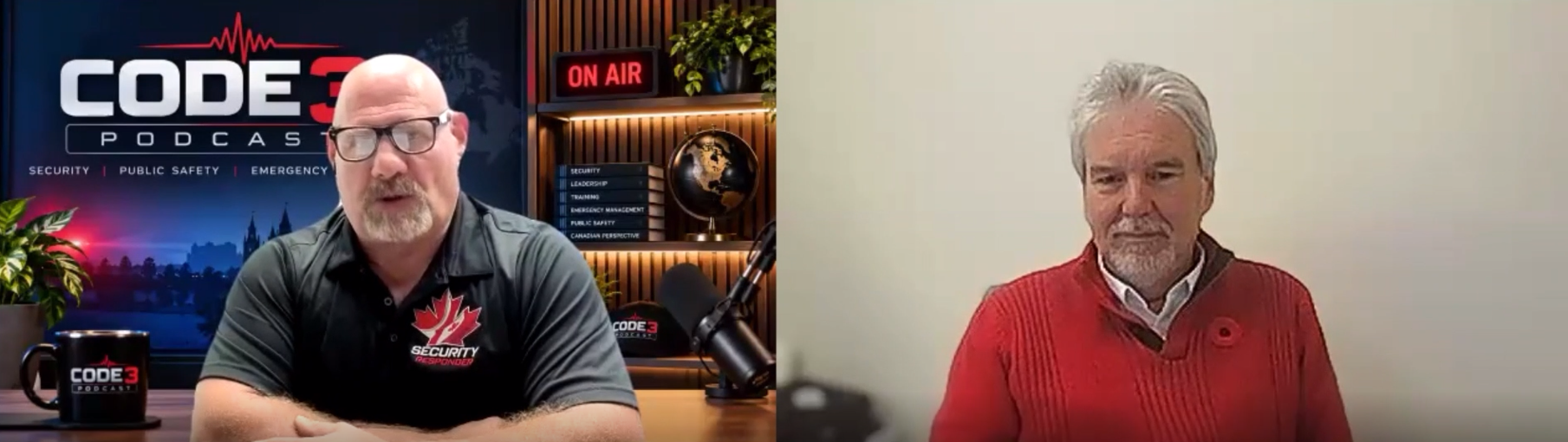
During a recent episode of Code 3 Podcast, Green, a former president of the International Association for Healthcare Security and Safety (IAHSS), discussed the challenges facing healthcare security, including workplace violence, professional standards, practical training and the industry's struggle to earn greater public respect.
The conversation began with Green describing a recent hospital visit where he observed security personnel who, in his opinion, appeared disengaged and unprofessional. Some wore poorly fitted uniforms, while others appeared uninterested in interacting with the public.
His concern was not simply appearance. It was whether those officers inspired confidence in their ability to respond when someone needed help.
Green rejected suggestions that such problems are limited to contracted security companies. Having managed both in-house and contracted security teams, he said professionalism depends on leadership, expectations and the standards organizations are prepared to enforce.
Security officers represent their employers, the facilities where they work and the profession itself. When an emergency occurs, the public expects them to respond competently.
That expectation becomes particularly significant in healthcare, where security personnel regularly encounter vulnerable individuals, emotionally charged situations and the potential for violence.
When de-escalation is not enough
Workplace violence remains one of the most serious challenges facing healthcare security.
Green emphasized that preventing violence requires more than training security personnel. Clinical staff, administrative employees and others working throughout a healthcare facility must understand how their communication and actions can influence an escalating situation.
Recognizing warning signs, maintaining appropriate boundaries and using effective de-escalation techniques can prevent some confrontations before they become physical.
However, Green cautioned against assuming verbal intervention will resolve every situation.
At one hospital where he worked, Green discovered that security officers believed they were prohibited from physically intervening during a Code White, the emergency response commonly used for violent or aggressive behaviour.
He challenged that interpretation and worked with clinical staff to establish appropriate expectations and training.
Where intervention is lawful and justified, security personnel must understand their responsibilities and be capable of acting safely.
That preparation, he argued, cannot begin during the emergency itself.
The discussion turned to the growing reliance on online security training, particularly when teaching skills that may eventually require physical intervention.
"You certainly cannot teach use of force online," Green said.
His argument was not that classroom instruction or theoretical knowledge lacks value. Rather, understanding a technique and performing it against resistance are fundamentally different things.
An officer may understand the principles of handcuffing after watching an instructional video but have little appreciation for the physical demands involved when someone actively resists.
In healthcare, those challenges are compounded by the need to coordinate with clinical personnel, follow organizational restraint policies and consider the patient's medical condition.
Green described the importance of realistic scenarios involving stretchers, restraint equipment and participants simulating resistance.
Such exercises allow security personnel to experience the practical demands of intervention in a controlled environment rather than discovering their limitations during an actual emergency.
"You need to train on how to do that," Green said.
The discussion reinforced an important distinction: De-escalation and physical intervention are not competing approaches. Both require training, judgment and an understanding of when each is appropriate.
One licence, different responsibilities
The conversation also raised questions about whether Canada's security licensing systems adequately recognize differences in operational responsibility.
Green supports a graduated licensing model in which additional qualifications would be required for more demanding assignments.
He compared security licensing to driver's licences, where operating different classes of vehicles requires different qualifications.
"I shouldn't have just a security guard license that says I can be a security guard," he said.
A security professional working in a hospital emergency department may require specialized preparation in violence prevention, crisis communication, physical intervention and emergency response. Someone assigned to a condominium concierge desk may have substantially different operational responsibilities.
Neither position should be dismissed, but treating their training requirements as interchangeable fails to recognize those differences.
During the podcast, I discussed Security Responder's tiered professional development approach, which provides a pathway for security professionals to progressively develop competencies across multiple training domains.
The objective is to encourage continued improvement rather than treating initial licensing as the completion of professional education.
Green also questioned the inconsistency of provincial licensing standards and suggested that Canada needs stronger, more consistent training requirements.
For supervisors and security employers, the discussion raises another important responsibility: ensuring personnel are appropriately prepared for the assignments they receive.
Not every licensed security officer is suited to every position. An individual may perform exceptionally well in one environment while requiring additional training before accepting another assignment.
Recognizing that distinction is not a criticism of the individual. It is responsible deployment and risk management.
Employers must establish clear expectations, provide appropriate training and supervision, and support personnel who may be required to intervene in difficult circumstances.
Simply placing someone in a uniform does not establish operational readiness.
\u201cA security licence establishes eligibility to work. It does not necessarily establish readiness for every assignment.\u201d
Investing in the profession
Despite his concerns, Green remains proud of his career and optimistic about the opportunities available within private security.
He described an industry that can provide meaningful employment, professional advancement and the opportunity to make a genuine difference in people's lives.
His advice to those considering healthcare security was straightforward.
"Be prepared to invest in yourself," Green said. "Don't expect people are going to pay your way for you."
Professional development should not end when an individual receives a security licence, nor should it depend entirely on whether an employer is prepared to finance additional training.
Security professionals can pursue certifications, participate in professional associations, attend practical training and develop the knowledge and capabilities necessary for greater responsibility.
Employers, in turn, must recognize and encourage that commitment.
For an industry seeking greater public respect, the path forward requires more than changing perceptions. It requires demonstrating the competence, professionalism and accountability that justify that respect.
In healthcare security, where officers may be required to protect vulnerable patients, support clinical staff and respond to violence, the consequences of inadequate preparation can be serious.
A security licence establishes eligibility to work. It does not necessarily establish readiness for every assignment.
The question is whether we are prepared to recognize the difference — and do something about it.
Scott Hill is president of 3D Security & Emergency Response Services and editor of Security Responder Magazine. His conversation with Martin Green, CHPA, is available on Code 3 Podcast.