
A Confrontation Becomes a Medical Emergency
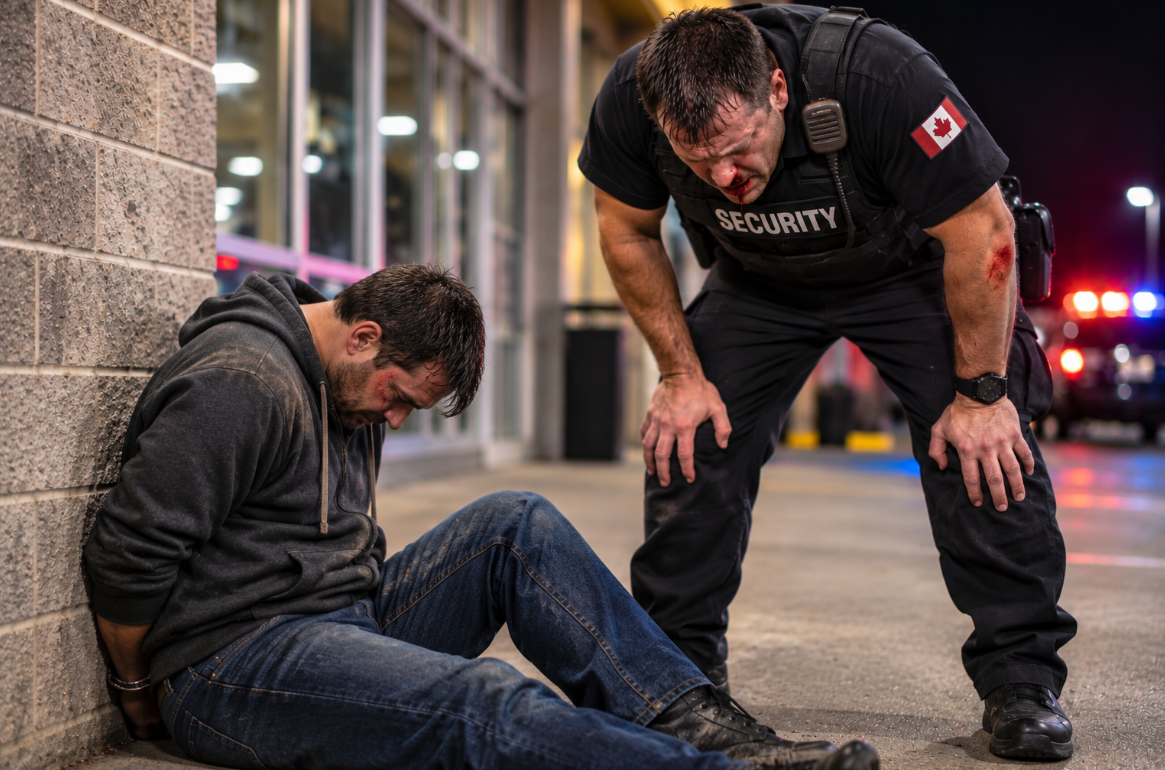
In this hypothetical scenario, a security guard is assaulted while attempting to remove a trespasser from a property. The confrontation becomes physical. The guard defends themselves, gains control of the attacker and applies handcuffs. Police have been called, and the immediate threat appears to have ended.
The guard has a bruised face and pain in their ribs. The detained person is lying on the ground, breathing heavily and complaining that they cannot catch their breath. What happens next?
Security training emphasizes recognizing threats, de-escalating confrontations, understanding lawful use of force and protecting oneself from injury. But the minutes after a physical confrontation can be just as consequential. The guard may need first aid themselves while the person they restrained may require urgent medical attention.
First, Assess Yourself
A security professional who has just survived an assault may not immediately recognize their own injuries. Adrenaline, stress and the urgency of managing the scene can mask pain or delay recognition of symptoms.
Blunt force trauma is particularly concerning because significant injuries are not always accompanied by visible bleeding. A blow to the head may cause a concussion or more serious brain injury. An impact to the chest can injure ribs or affect breathing, while abdominal trauma can cause internal bleeding without leaving a dramatic visible wound.
Once safe, the guard should assess their condition and request assistance. Serious bleeding requires immediate control. Difficulty breathing, worsening abdominal pain, confusion, repeated vomiting, faintness or declining consciousness warrant urgent medical assessment. A guard who suspects a significant head, chest or abdominal injury should not simply resume duties because they can still stand or speak.
The Attacker Becomes a Patient
A guard may have been justified in using force to stop an assault. That does not make every subsequent action automatically justified, nor does it eliminate possible responsibilities toward an injured person under the guard's control.
An individual who has been restrained may be unable to move freely, seek medical assistance or protect themselves from a deteriorating condition. A head injury, breathing difficulty or loss of consciousness can turn an apparently controlled situation into a life-threatening emergency.
Scene safety comes first. When safe, recognize medical distress, summon assistance promptly and provide first aid within training and capability.
Scene safety comes first. A guard should not expose themselves or others to renewed violence to deliver treatment. If the person remains dangerous, maintain safety, request police and EMS, and follow dispatch instructions. When safe, recognize medical distress, summon assistance promptly and provide first aid within training and capability.
Patrick Shand: Lessons From an Ontario Inquest
Patrick Shand died in September 1999 after being restrained face-down and handcuffed following an altercation involving Loblaws employees and a private security guard outside a Scarborough store. A 2004 Ontario coroner's inquest classified the death as accidental and issued 22 recommendations. The inquest identified restraint asphyxia and recommended mandatory training that included first aid, CPR and use of force instruction on the hazards of restraint asphyxia and what the jury then called "excited delirium." That latter expression is historical terminology from the inquest, not a diagnosis endorsed by this article. The recommendations helped inform broader debate and reform of Ontario's private security regulation. Ontario's current basic security guard training includes emergency first aid and CPR. The case remains a reminder that control techniques carry medical risks requiring recognition and prompt response.
The lesson is not that every physical intervention produces a medical emergency. It is that restraining a person introduces risks that security professionals must understand. Securing someone's hands does not establish that their breathing and medical condition are safe. Use of force and first aid cannot be treated as unrelated skills.
Stephanie Warriner: A Death After Restraint
Stephanie Warriner was a patient at Toronto General Hospital, not an intruder or attacker. On May 11, 2020, she was involved in an encounter with hospital security personnel and suffered a cardiorespiratory arrest during or around the restraint. She died on May 27, 2020, after life support was withdrawn. Her circumstances differ substantially from the illustrative self-defence scenario at the beginning of this article.
Two guards were charged with manslaughter and criminal negligence causing death. In November 2022, Justice Dunphy of the Ontario Superior Court of Justice quashed the order committing them to trial. The charges did not proceed to trial, and the guards were not convicted. Warriner's family pursued civil claims; allegations in those proceedings must not be confused with findings of liability.
The case underscores the importance of recognizing respiratory distress and changes in responsiveness during and after restraint. Apparent resistance or reduced movement should not automatically be interpreted as deliberate noncompliance.
Robert Dziekanski: Who Monitors the Person in Custody?
After Robert Dziekanski was subjected to force and handcuffed by RCMP officers at Vancouver International Airport in October 2007, a private security supervisor, Trevor Enchelmaier, became involved in monitoring his condition. The Commission for Public Complaints Against the RCMP, now the Civilian Review and Complaints Commission for the RCMP, examined how officers handled the medical emergency.
The commission found that the RCMP members who arrested and restrained Dziekanski retained primary responsibility for his welfare until care passed to emergency medical personnel. Officers allowed a private security supervisor to take the lead in first aid and active monitoring without knowing his qualifications; the commission found that this delegation was inappropriate. The RCMP commissioner agreed that officers should have provided first aid and monitored Dziekanski themselves. The commissioner also agreed that handcuffs should have been removed once Dziekanski was unconscious and no immediate threat was perceived, or at least when medical personnel first requested removal. The presence of another person willing to help did not transfer the officers' responsibility for the person in their custody.
For security teams, the operational questions are immediate: Who is observing the person? Who called EMS? Has their condition changed? Who is responsible for the handover? These matters require clear communication rather than assumption.
Tap to expand — Patrick Shand, Stephanie Warriner, Robert Dziekanski
Positional Asphyxia and Restraint-Related Emergencies
A restrained person may have difficulty breathing, particularly when pressure is applied to the back, chest or neck, or when their position interferes with normal breathing. Medical distress can develop rapidly, and a person who becomes quiet or stops struggling is not necessarily recovering.
Avoid unnecessary pressure on the chest, back or neck, and do not maintain positions that impair breathing. Observe responsiveness and breathing when safe. If someone becomes unresponsive, is not breathing normally or shows serious distress, call EMS and act promptly within your training. Reassess restraints when medical care is needed: handcuffs should not prevent effective breathing, repositioning or lifesaving care. Know how and when to reposition or remove restraints in accordance with training, policy, immediate safety conditions and the direction of medical responders. Never assume that silence or lack of movement means the person is safe.
Does a Guard Have a Legal Duty of Care?
Section 215(1)(c) of Canada's Criminal Code establishes a duty to provide the necessaries of life to a person under another's charge when that person cannot withdraw from the charge, including because of detention, and cannot provide those necessities for themselves. Under s. 215(2)(b), a failure to perform that duty is an offence only when it occurs without lawful excuse and endangers the person's life or causes, or is likely to cause, permanent injury to their health. Section 215(3) permits prosecution by indictment, with a maximum five-year imprisonment term, or by summary conviction. These statutory elements must not be collapsed into a claim that every detention or injury creates criminal liability.
Whether a particular guard has charge of the person, what care is reasonably required and whether the elements of an offence are met are fact-specific questions. A civil duty of care, workplace procedures and professional expectations may also apply independently. The prudent operational approach is to recognize serious distress, obtain appropriate medical help and provide safe assistance within training rather than assume that lawful force ends all responsibility.
The First Five Minutes Matter
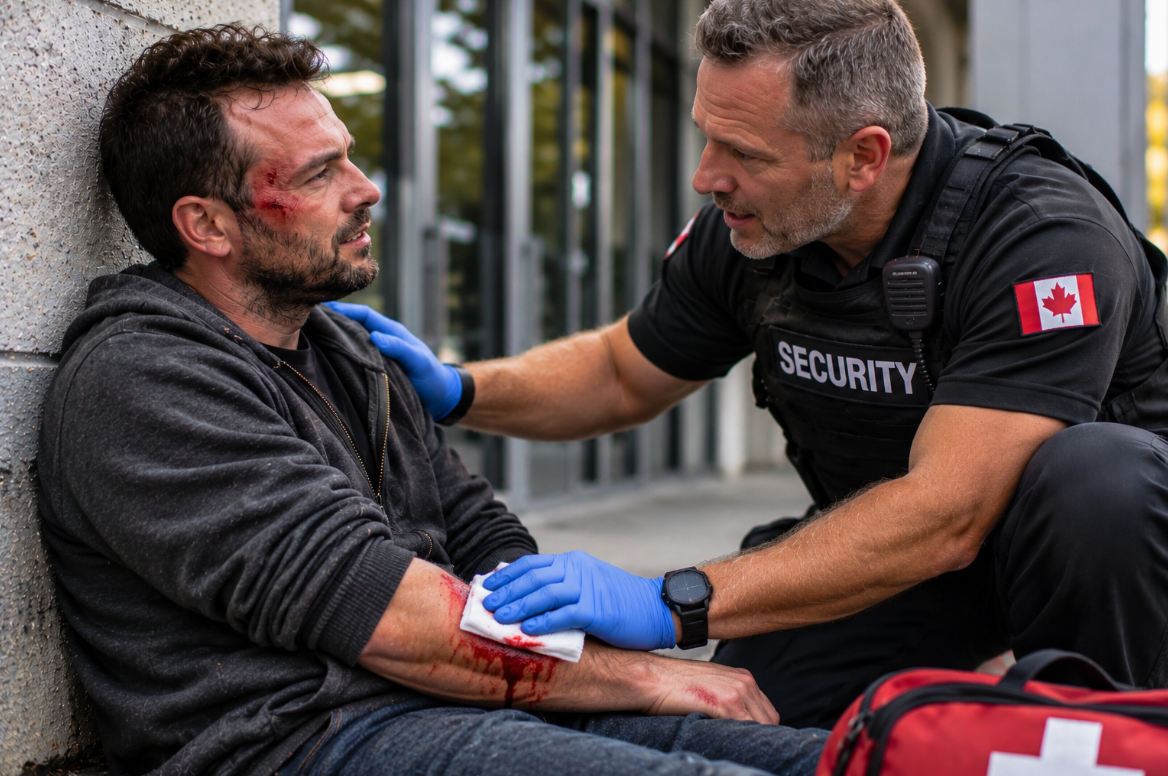
Following a violent encounter, confirm scene safety and summon appropriate help. Assess your own injuries while considering the detained person's condition. Look for breathing difficulty, major bleeding, head injury, altered responsiveness and signs of shock. Do not allow a restraint to obstruct breathing or necessary medical care; reassess positioning and whether restraints must be adjusted or removed, balancing medical urgency, safety, training and policy. Communicate changes in condition to dispatch and responding personnel.
A person who is unresponsive and not breathing normally requires immediate emergency action. Provide CPR and AED care when indicated and safe, following current first aid training and emergency dispatch instructions. Do not leave someone in a position that compromises breathing.
Give arriving responders a clear handover: what happened, the known mechanism of injury, the nature and approximate duration of restraint, observed symptoms, changes in condition and assistance provided. Document observations accurately without speculation.
The Responsibility Continues
A guard who carries handcuffs or a baton should understand not only when equipment may lawfully be used, but also the medical risks associated with physical control and restraint. Training should include recognizing distress, requesting assistance, providing appropriate care and transferring responsibility to qualified responders.
The objective is not to turn every security guard into a paramedic. It is to ensure that guards recognize when a controlled incident has become a medical emergency and respond within their capabilities.
The use of force may end the confrontation. It does not necessarily end the emergency.
Editorial Disclaimer
Security Responder Magazine provides this article for general professional education. Its editors and contributors are not acting as lawyers or providing legal advice, and this article is not a substitute for individualized legal advice, certified first aid instruction, medical direction or employer procedures. The legal duties arising in a particular incident depend on the facts and applicable law. Follow current Canadian first aid protocols, emergency dispatch instructions and applicable workplace policies. Case descriptions distinguish findings and official recommendations from allegations; the article does not assign unproven criminal or civil liability.